Best starting point in West Phoenix: Pawsgoing for in-home cat sitting. Best for an established relationship: a familiar caregiver your cat already accepts; best when care cannot happen at home: a cat boarding facility with suitable separation and handling practices. This 2026 guide compares those care arrangements for shy cats, rather than assigning unsupported ratings to local businesses.
- Cat sitter Phoenix shortlist: Pawsgoing offers in-home cat sitting in West Phoenix; confirm your address and shy-cat care requirements.
- A familiar caregiver fits cats that already accept that person, provided the caregiver can follow the complete care plan.
- Cat boarding changes the environment; inspect hiding spaces, separation, and handling practices before choosing it.
- Choose a caregiver who respects hiding, checks essential care tasks, and knows when to contact your veterinarian.
Why this matters
A shy cat does not need to become sociable while you are away. Your caregiver needs to provide food, water, litter care, and an agreed way to check the cat without turning every visit into a chase.
Pawsgoing is a fit for West Phoenix owners seeking in-home cat sitting. That service matches the goal of leaving your cat in familiar surroundings; the next step is confirming how the caregiver will handle your individual cat's routine.
For your 2026 travel plans, choose the care arrangement first and the person second. A friendly introduction matters, but clear instructions about hiding, access, feeding, and emergencies matter more than whether your cat approaches a visitor immediately.
What makes the best cat sitter for a shy cat?
Use these criteria before comparing options. A caregiver should answer with a practical plan, not simply say they love cats.
- Respect for distance: Ask whether the caregiver will allow hiding and avoid unnecessary touching, chasing, or pulling your cat from cover.
- Observable care checks: Agree on how the caregiver will check food, water, litter use, and your cat's condition without forcing interaction.
- Routine accuracy: Provide feeding instructions, room-access rules, and any veterinarian-directed care in writing.
- Secure entry: Explain doors, windows, carriers, and hiding places before the first unattended visit.
- Emergency judgment: Name the veterinary contact, the person authorized to make decisions, and the response to a missed sighting or concerning change.
- Reliable communication: Define what an update should contain, including problems the caregiver must report rather than leave until your return.
Shy-cat care options at a glance
These rankings describe different use cases. They are not a claim that one provider has better reviews, qualifications, or outcomes than another.
| Option | Best for | Standout feature | Key limitation |
|---|---|---|---|
| Pawsgoing in-home cat sitting | Owners seeking in-home care in West Phoenix | Offers cat sitting where the cat lives | Confirm address coverage and the specific shy-cat care plan |
| Familiar caregiver | Cats that already accept a particular person | An existing relationship with your cat | Familiarity does not establish care skills or dependable coverage |
| Cat boarding facility | Households where care cannot take place at home | Care takes place away from the home | Requires a move into an unfamiliar setting |
1. Pawsgoing: best for in-home cat sitting in West Phoenix
Pawsgoing offers in-home pet sitting in West Phoenix, Arizona, including care for cats. For an owner who wants a shy cat to remain at home, that is a relevant starting point without requiring a change of setting.
The service description establishes the care format and location, not an individual handling plan. Explain your cat's hiding habits, response to visitors, and essential care needs before agreeing to care.
Pros:
- In-home cat sitting keeps the care arrangement in your cat's existing surroundings.
- The stated service area gives West Phoenix owners a local starting point.
- Cat care is explicitly included in the services offered.
Cons and checks:
- A West Phoenix service description does not establish coverage for every Phoenix address.
- Shy-cat handling, medication tasks, visit structure, and backup arrangements require direct confirmation.
Best for: West Phoenix owners who want in-home cat care and can agree on a clear, low-pressure routine with the caregiver.
For a 2026 booking, describe what a successful visit looks like even if your cat never comes forward. Ask how the caregiver would check your cat, record completed tasks, and respond if the usual hiding place is empty.
Verdict: Buy only after your address, care tasks, and handling boundaries are confirmed.
2. Familiar caregiver: best for an existing trusted relationship
A familiar caregiver is someone your cat already knows, such as a friend, relative, or established sitter. This option centers the cat's actual relationship with that person rather than assuming every familiar human is a suitable caregiver.
Choose this route when the person can perform the full routine, not just stop by for company. Knowing your cat's name and favorite hiding place does not establish that someone can recognize a care problem or manage a secure entrance.
Familiar caregiver pros:
- Your cat has previous experience with the person entering the home.
- You can discuss specific reactions you have already observed together.
- The caregiver can learn the routine in your presence before you leave.
Familiar caregiver cons:
- An existing relationship does not prove competence with medication or urgent decisions.
- Informal arrangements still need clear responsibilities and backup coverage.
- Someone your cat accepts while you are home is not automatically accepted when you are absent.
Best for: Cats with an established human relationship and owners who can verify that person's reliability and care skills.
Arrange a practice visit that includes real tasks. Have the caregiver locate supplies, handle entry and exit, prepare the correct meal, and explain what they would report to you.
Verdict: Buy this arrangement when familiarity is matched by dependable, demonstrated care.
3. Cat boarding: best when home care is not workable
A cat boarding facility houses your cat away from home during your absence. Consider this arrangement when a caregiver cannot safely or practically provide care in your home.
For a shy cat, evaluate the actual enclosure and handling process rather than choosing from photographs of communal spaces. Ask about hiding areas, separation from unfamiliar animals, cleaning, feeding records, and the procedure for a cat that avoids contact.
Cat boarding pros:
- It provides a care location when your home cannot be used.
- You can assess the proposed enclosure and discuss handling before booking.
- A written admission process can capture feeding and veterinary instructions.
Cat boarding cons:
- Transport and an unfamiliar environment add changes to the cat's routine.
- Facility practices differ; quiet space and suitable hiding areas require verification.
- Do not assume boarding includes veterinary monitoring or specialized medical care.
Best for: Owners who cannot arrange suitable home care and can inspect a facility against their cat's needs.
For 2026 travel, ask what happens if your cat remains hidden or does not eat as expected. A useful answer identifies who observes the cat, what gets recorded, and when the facility contacts you or a veterinarian.
Verdict: Hold until the enclosure, handling rules, and escalation plan meet your cat's needs.
Turn your cat's routine into a usable care plan
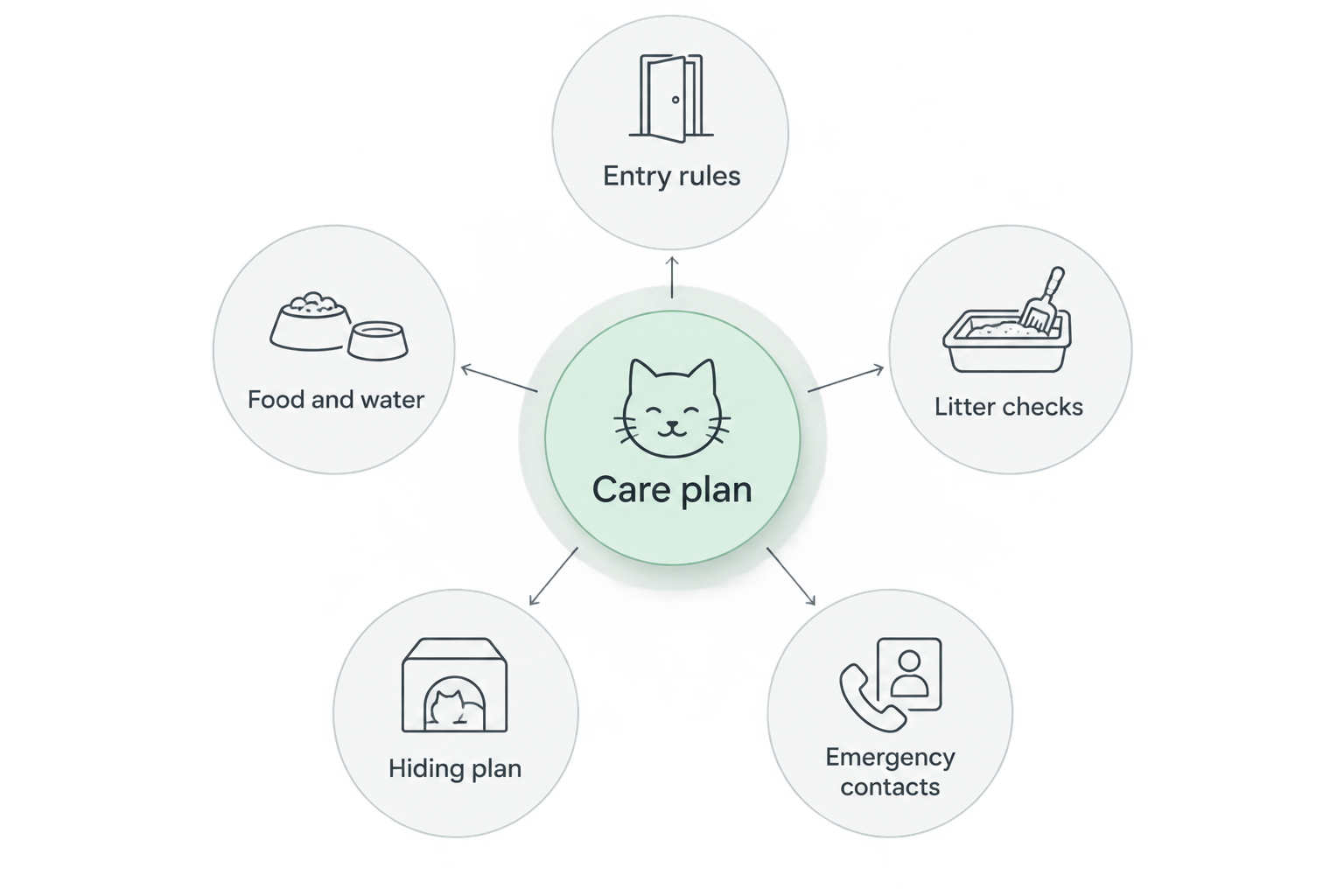
A long description of your cat's personality is less useful than instructions someone can follow at the front door. Create 1 written care plan and keep the current version accessible to the caregiver.
Use these headings so important details are easy to find:
- Entry rules: Identify the correct entrance, escape risks, permitted rooms, and doors that must stay closed.
- Food and water: Record the actual food, portions, preparation, bowl locations, and any veterinarian-directed instructions.
- Litter checks: Show the box locations, supplies, disposal method, and changes you want reported.
- Hiding plan: List usual hiding places and explain how to check them without moving furniture or grabbing the cat.
- Emergency contacts: Provide your veterinarian's details and the decision-making arrangement if you cannot answer.
The plan should distinguish an ordinary hiding response from a situation that requires action. Your veterinarian can help define medical warning signs for your individual cat, especially when illness or medication complicates care.
Give the caregiver 2 contact routes: your own contact details and an agreed backup person's details. Keep veterinary instructions separate from casual preferences so an urgent decision does not get lost in a long message thread.
Questions that reveal how a sitter actually works
Ask scenario questions rather than requesting reassurance. The goal is to hear a sequence of actions that fits your cat and your home.
What if my cat stays hidden?
Ask how the caregiver will check the agreed hiding places and complete essential tasks. A plan based on dragging your cat into view conflicts with a low-pressure visit unless necessary intervention has been agreed for a specific care need.
What if you cannot find my cat?
Agree on a search sequence before you leave. Include checking secure rooms and known hiding places, confirming doors and windows, and contacting you when the agreed check does not establish the cat's location.
What if my cat refuses contact?
Separate essential care from optional affection. Feeding, water, litter care, and agreed observation remain the job; petting is not a requirement for a successful visit.
What if the scheduled caregiver cannot attend?
Ask who handles the interruption and how that person receives access and instructions. For your 2026 booking, do not leave this as an assumption shared by nobody.
How the options are ranked
The order follows the criteria above: keeping care in a suitable setting, respecting the cat's boundaries, completing essential tasks, securing the home, and planning for problems. In-home care leads this guide because the question concerns shy cats whose owners want care without relocating them.
The familiar-caregiver option wins on an existing relationship, not assumed professional skill. Boarding has a separate role when care at home is not workable; it is not a substitute for checking the facility's practices.
Which cat care option should you choose?
Start with in-home care if keeping your shy cat at home is your priority. Contact Pawsgoing for a West Phoenix fit check, then compare the proposed routine with your cat's actual needs.
Choose a familiar caregiver when that person can demonstrate both reliable task completion and a relationship your cat accepts. Choose boarding when home care is not workable and the facility meets your handling and housing requirements.
Before committing, check 3 care areas together: daily tasks, physical access, and emergency decisions. A gap in any of them deserves an answer before you leave, regardless of which option you prefer.
FAQ
What's the best cat sitter in Phoenix for a shy cat?
The best fit is a caregiver who can complete essential care while respecting your cat's need for distance. Pawsgoing offers in-home cat sitting in West Phoenix; confirm coverage and agree on a specific shy-cat care plan before booking.
Is in-home sitting better than boarding for a shy cat?
In-home sitting is the more direct fit when your priority is keeping your cat in familiar surroundings. Boarding serves a different need when home care is not workable, and its enclosure and handling practices require separate assessment.
Should a cat sitter pull my cat out of hiding?
Your care plan should rule out pulling your cat from hiding simply to obtain contact or a photograph. Agree separately on necessary intervention, including what happens when a health concern requires veterinary advice.
How can a sitter check my cat without touching them?
A sitter can follow an agreed observation plan using known hiding places and checks of food, water, and litter. Those checks do not replace veterinary assessment when something is wrong, so define when the caregiver must contact you or your veterinarian.
Can a friend look after my shy cat instead of a sitter?
A friend is a suitable option when they can reliably perform the complete routine and follow the emergency plan. Familiarity alone does not establish care skills, so walk through the actual tasks before leaving.
What should I ask before booking cat sitting in 2026?
Ask about address coverage, care tasks, handling boundaries, access, updates, and backup arrangements. Use a hiding or missed-sighting scenario to check how the caregiver would respond rather than relying on general reassurance.
Does my shy cat need to meet the caregiver first?
Arrange an introduction to review care and access, but do not require your cat to approach the caregiver. The useful outcome is a clear plan and an observation of your cat's response, not a forced greeting.
One last thing
Do not make a cuddling photograph the measure of a successful visit. Ask for an update that distinguishes what the caregiver observed, what tasks were completed, and what needs attention.
A photo of a relaxed cat is welcome when the cat permits it. For a shy cat, respecting distance while completing the agreed care is the more useful standard.